


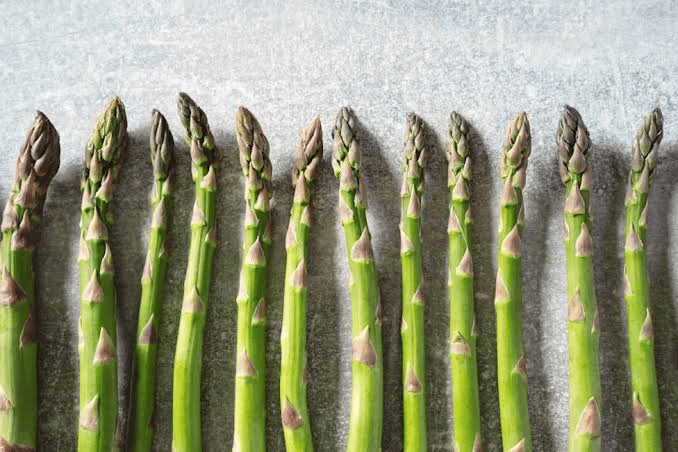
Asparagus has quietly become one of the more difficult vegetables to source consistently. Whether you’re a home cook noticing higher prices at the grocery store or a food manufacturer trying to lock in canned supply for the year ahead, the situation is real — and it has more than one cause.
This article breaks down why asparagus is so vulnerable to supply disruptions, how fresh and canned products are affected differently, what’s driving the particularly tight 2026 supply picture, and what buyers and consumers can reasonably do about it.
Why Asparagus Is Prone to Supply Disruptions
Asparagus isn’t like most vegetables. It’s a perennial crop, meaning farmers plant it once and harvest from the same crowns for many years. But those crowns take several years to become productive in the first place. That growth timeline creates a fundamental problem: if demand rises suddenly, farmers cannot simply plant more acreage and expect results within a single season.
The crop is also unusually sensitive to weather. Frost, heat waves, and inconsistent rainfall can reduce both yield and spear quality significantly. A single difficult growing season doesn’t just affect that year’s harvest — it can weaken crown health and reduce output in the seasons that follow.
On top of that, farmers are dealing with rising input costs, water constraints, and labor shortages. When the numbers don’t work, some growers reduce their planted area or move to other crops altogether. Because asparagus takes years to establish, those decisions ripple forward in ways that annual crops don’t.
The result is a vegetable that is structurally difficult to scale up quickly, easily disrupted by weather, and costly to grow under current farming conditions. That combination explains why shortages, when they occur, tend to be more than a temporary logistics problem.
Fresh vs. Canned Asparagus — Two Different Supply Problems
It’s easy to assume that a shortage of fresh asparagus automatically means canned asparagus is also scarce — or vice versa. In practice, the two product forms face different constraints, though they are connected.
Fresh asparagus availability shifts with harvest seasons, weather in key exporting regions, labor availability at harvest time, and freight logistics. A disruption in any of those areas can tighten fresh supply and push retail prices up quickly.
Canned asparagus has a different bottleneck. Processing plants don’t just need asparagus — they need Grade 1 raw material, which means large-diameter, high-quality spears. That’s what determines how much canned product can actually be produced. Whole spears and extra-long grades require the best raw material and are the most constrained when supply quality drops. Cuts and smaller formats can tolerate slightly lower-grade input, which is why they tend to remain available longer during a shortage.
The connection between fresh and canned markets runs through raw material. When a poor growing season reduces the volume of high-quality fresh spears available from a major producing country, there is simply less Grade 1 material for processors to work with. A fresh harvest problem in the field eventually becomes a canned product availability problem on the shelf — even if the two seem unrelated to most buyers.
The 2026 Canned Asparagus Shortage Explained
Heading into 2026, the canned asparagus market is under particular pressure. Industry estimates indicate that Grade 1 raw material available for canning is approximately 34% below a normal year — a significant drop that directly limits how much finished product processors can pack.
Understanding why that number matters requires some context about where canned asparagus comes from. China produces the overwhelming majority of the world’s canned asparagus supply. When weather-related damage reduces the volume of high-grade spears available in China, the effect isn’t limited to the domestic market. It flows through global supply chains and affects buyers in every country that imports canned asparagus.
The situation is being sharpened further by how processors are managing the raw material they do have. Factories with usable supply and available production capacity are allocating it early. Buyers who wait — expecting the same lead times and availability they’ve seen in prior years — are finding limited slots or none at all.
This is largely a one-season problem tied to weather damage affecting raw material quality and volume. That means it is acutely tight for 2026, but it is not necessarily a permanent shift. Whether 2027 looks different will depend on what growing conditions produce in the next harvest cycle.
How the Shortage Affects Consumers, Restaurants, and Manufacturers
Consumers
For shoppers, the most visible sign of a shortage is price. Fresh asparagus tends to get more expensive, particularly outside the spring peak season when domestic harvests provide some buffer. Bundles may be smaller, promotional pricing on asparagus becomes less common, and certain SKUs may simply be out of stock.
When fresh asparagus is expensive or unavailable, practical substitutes include broccolini, green beans, and zucchini. These won’t replicate asparagus exactly, but they work well in similar cooking applications — roasting, stir-frying, or pairing with proteins — and tend to remain more stably priced.
Restaurants
Wholesale asparagus prices can increase substantially during a shortage, which creates a real problem for restaurants that feature it on their menus year-round. A kitchen running an asparagus risotto as a permanent menu item, for example, may find that consistent wholesale supply is no longer available at a workable price point.
Practical responses include moving asparagus dishes to seasonal specials rather than year-round staples, switching to frozen asparagus for cooked applications, reducing portion sizes, or substituting a comparable vegetable in similar dishes. Being transparent with guests about seasonal menu adjustments tends to land better than quietly changing a dish without explanation.
Food Manufacturers
For food manufacturers, the 2026 situation is more operationally significant. A company using whole canned asparagus spears in a ready-meal product line may find that its usual suppliers cannot guarantee previous volumes because Grade 1 raw material is down by roughly a third.
Buyers in this position have several options worth considering. Engaging early with suppliers to secure a share of limited production allocations is the most direct approach. Adjusting product specifications — moving from whole spears to cuts, for instance — can open up access to raw material that would otherwise not qualify. Some manufacturers may also consider formula adjustments or limited-time production runs rather than trying to maintain year-round supply at full volume.
The core principle for institutional buyers in a constrained market is this: flexibility on specification tends to unlock more options than holding firm to previous standards.
What the Longer-Term Outlook Looks Like
The 2026 canned asparagus shortage is largely tied to a single season’s raw material quality problem, which means the situation could improve meaningfully if growing conditions normalize. That said, the structural factors that made asparagus vulnerable in the first place — its slow crop biology, climate sensitivity, and the economics of farming — are not going away.
Climate variability, water availability, and labor pressures are all expected to create ongoing volatility in asparagus supply across major producing regions. Buyers and consumers should probably expect more year-to-year variation in availability and price rather than a return to the smooth, predictable supply that characterized earlier decades.
Retailers and distributors that currently rely on a single supplier or a single country of origin may find it worthwhile to diversify sourcing — drawing on producers in Peru, Mexico, or domestic growers — even if that raises average costs slightly. The trade-off is more resilience when one supply source has a difficult season.
For broader business coverage of supply chain developments and market shifts like this one, AllBizDaily tracks trends across industries affecting buyers, operators, and consumers.
Key Takeaways
- Asparagus is structurally vulnerable to shortages because of its slow crop biology, climate sensitivity, and high input demands.
- Fresh and canned asparagus face different constraints — but a poor fresh harvest reduces the Grade 1 raw material that canners depend on.
- Grade 1 raw material for canning in 2026 is estimated at roughly 34% below a normal year, driven largely by conditions in China, where most of the world’s canned asparagus is produced.
- Whole canned spears are the most affected; cuts and smaller formats have slightly more availability.
- For buyers, engaging early and being flexible on product specifications are the most practical responses to constrained supply.
- For consumers and restaurants, substituting comparable vegetables is a reasonable short-term approach when asparagus is expensive or unavailable.
The current situation is genuinely tight, but it is not a permanent collapse of asparagus supply. Understanding the mechanics behind it helps buyers and consumers make better decisions — and avoid being caught off guard the next time growing conditions shift.
Read Also:
