


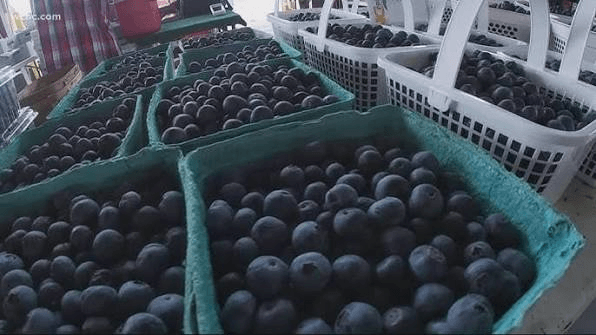
If you’ve been to the produce section recently and noticed fewer blueberry sales, smaller containers, or prices that made you pause — you’re not imagining it. Blueberry supply in 2026 has tightened from several directions at once, and shoppers are starting to feel it at the register.
This article breaks down what’s actually happening: why supply is tighter, which types of blueberries are most affected, where the pressure is coming from geographically, and what you can reasonably expect in the months ahead.
There Is No Total Blueberry Shortage — But Supply Is Tighter Than Usual
First, the most important clarification: blueberries have not disappeared from store shelves. You can still find them. But according to the North American Blueberry Council’s Crop Call Report from February 2026, overall availability is projected to be slightly down compared to last year, with tighter supply expected during the spring transition period and some delays in when seasonal supply becomes available.
The impact is more likely to show up as higher prices, fewer promotional sales, and smaller package sizes than as completely empty shelves. That distinction matters for setting realistic expectations.
Think of it like a relay race. Blueberry supply moves through a seasonal handoff between growing regions — as one region’s harvest winds down, another picks up. When one runner in that handoff slows down, a gap opens up. You don’t lose the race entirely, but the timing gets disrupted, and that gap is exactly what’s showing up in stores right now.
Why a Drought in Maine Matters to the Entire Wild Blueberry Market
Maine is not just one blueberry-growing state among many. It supplies nearly the entire U.S. wild blueberry crop. That makes it uniquely important — and uniquely vulnerable.
Severe drought and heat stress in Maine have damaged wild blueberry growth and lowered harvest expectations for 2026. Reports from Yahoo News and Tasting Table both confirm that Maine’s drought conditions are a significant driver of tighter wild blueberry supply heading into this year.
Wild blueberries are fundamentally different from the cultivated blueberries you typically see in fresh pint containers. They grow on native barrens — land that developed naturally over time — and cannot simply be relocated or replanted when conditions turn poor. If the growing conditions fail, there is no quick fix. Farmers have to wait for the land to recover.
The practical effect is concentrated on specific products: frozen wild blueberries, certain specialty brands, and some processed items that rely on wild blueberry varieties. If you buy frozen wild blueberries regularly, this is the part of the supply story that affects you most directly.
How Peru Became a Key Factor in Fresh Blueberry Prices
While Maine’s drought is the dominant story for wild blueberries, a separate and equally important factor is affecting the fresh blueberries that most shoppers buy year-round.
Peru provides approximately one-third of the total U.S. blueberry supply. That is a substantial share, and it makes the U.S. fresh blueberry market heavily dependent on what happens on farms thousands of miles away.
In 2025 and into 2026, weather-related harvest disruptions in Peru — connected in part to El Niño conditions — reduced the volume of blueberries available for export to the United States. Because so much of the U.S. supply during certain seasons comes from Peru, a disruption there moves quickly from the farm to the grocery shelf.
According to a NewsNation report, retail blueberry prices have risen roughly 60% since September, with some markets seeing prices close to $6 per pound. It’s worth noting that this figure reflects reported retail data and should not be treated as a confirmed national average — prices will vary by region and retailer. But the directional trend is clear: fresh blueberries cost meaningfully more than they did several months ago.
For everyday shoppers, this is the part of the shortage that hits closest to home. The pint of fresh blueberries you might have grabbed on sale for $2.99 is now significantly more expensive, and promotional pricing has largely disappeared from weekly circulars.
Wild Blueberries vs. Fresh Blueberries — Two Different Supply Problems
One of the most common misunderstandings about the 2026 blueberry situation is treating it as a single, uniform shortage. It isn’t. There are actually two distinct supply problems running in parallel, and they have different causes, different product impacts, and different supply chains.
Wild Blueberries: A Drought Story
Wild blueberries are sourced almost exclusively from Maine and eastern Canada. They are sold primarily in frozen form and appear in a range of products from smoothie bags to baked goods. The pressure here comes directly from drought and heat stress in Maine’s growing regions.
Because the supply base is geographically narrow and cannot be easily diversified, a bad weather year in Maine has an outsized effect on this category. There is no backup source to fill the gap.
Fresh Cultivated Blueberries: A Timing and Import Story
Fresh cultivated blueberries come from a much broader network. Domestic states like Georgia, North Carolina, and California contribute at different points in the season. Peru and Chile are major international suppliers. The issue here is not drought in one specific region — it is harvest timing disruptions and weather-related problems abroad that have reduced export volumes.
The seasonal handoff between these regions is where the supply gap becomes most visible. When Peru’s harvest volume is lower and the domestic growing season hasn’t fully ramped up, the transition window becomes tight. That is largely where the U.S. fresh blueberry market is right now.
What This Means for Shoppers
A shopper looking for frozen wild blueberries is dealing with a fundamentally different situation than one looking for a fresh pint in the produce aisle. The causes are different, the affected products are different, and the potential relief timelines are different. Understanding that distinction helps set more accurate expectations about what to buy and when.
What Shoppers Can Expect Going Forward
Based on current forecasts, the tightest supply window appears to be during the spring transition period. As the domestic growing season progresses — with production ramping up in Georgia and North Carolina and eventually reaching peak season states — fresh blueberry availability should improve.
For wild blueberries, the situation is more uncertain. Recovery depends on growing conditions in Maine improving, and that is not something that can be forced or accelerated. Shoppers who rely on frozen wild blueberries may want to plan around tighter availability for a longer stretch of 2026.
A few practical considerations worth keeping in mind:
- Expect fewer sale promotions. When supply is tight, retailers have less incentive to discount. Regular price is likely the norm for now.
- Consider cultivated frozen blueberries as an alternative. If frozen wild blueberries are unavailable or expensive, cultivated frozen blueberries are a widely available substitute for most recipes.
- Watch for later-season price relief. As domestic production from U.S. states increases through the summer, fresh blueberry prices may ease. That pattern is typical of seasonal produce markets.
- Package sizes may be smaller. Some retailers manage supply pressure by reducing package size rather than raising the unit price. Check the price per ounce rather than the sticker price.
For anyone tracking food prices and supply trends more broadly, AllBizDaily covers business and consumer market developments that affect everyday purchasing decisions.
The Bottom Line
The 2026 blueberry supply situation is real, but it is not catastrophic. Blueberries are still available. What has changed is cost, variety, and promotional frequency — all of which reflect genuine supply pressure from multiple sources at once.
Maine’s drought has meaningfully reduced wild blueberry harvests. Peru’s weather disruptions have tightened the fresh blueberry supply that American shoppers depend on during spring. And the seasonal transition between growing regions has amplified both problems during a window when supply is naturally thinner.
The clearest takeaway: pay attention to what type of blueberry you need, adjust expectations on price, and look for some improvement as the domestic growing season gains momentum later in the year.
Read Also:
