


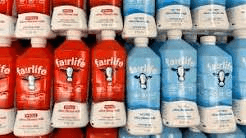
Fairlife milk has become increasingly difficult to find on store shelves across the United States — and the reasons behind the shortage are more layered than a single supply chain disruption.
This article breaks down what triggered the current shortage, which products are affected, how long it may last, and what you can do while supplies are limited.
A Ransomware Attack Paused All U.S. Fairlife Production
The most immediate cause of the current shortage is a cyberattack. Fairlife detected unauthorized third-party access to parts of its network, including systems that directly support production operations.
As a precaution, those systems were taken offline and all U.S. production facilities paused operations while an investigation took place. Think of it like a factory-wide computer outage — even if the physical equipment is intact, production stops when the systems that coordinate and monitor operations go dark.
Coca-Cola, which owns Fairlife, confirmed that product quality and safety were not compromised. Any Fairlife product already on shelves or in your refrigerator is safe to consume. That said, Coca-Cola has not provided a public timeline for when U.S. production will resume, which leaves retailers and consumers without a clear picture of when supply will stabilize.
One important distinction: Fairlife’s Canadian operations were not affected by the attack and continue to run normally. The disruption is specific to U.S. facilities.
Supply Was Already Stretched Before the Attack
The ransomware incident did not create the shortage from nothing — it landed on top of a supply problem that had already been building for at least a year.
Fairlife was already struggling to keep up with demand before any cyberattack occurred. The brand has grown a loyal following among fitness-focused consumers, people managing diabetes, and anyone who needs a lactose-reduced milk option. That consistent demand has repeatedly outpaced what Fairlife’s existing production facilities could actually produce.
The supply strain became visible at the retail level. At least one regional grocer publicly announced it would stop carrying all Fairlife varieties because the company could not reliably fulfill orders. The store cited a straightforward issue: demand for the brand keeps growing faster than the available supply.
Community reports across multiple U.S. regions told a similar story. In places like Weston, West Virginia, residents noted that Fairlife whole milk was consistently out of stock — not because coolers were broken or stores were mismanaged, but because product simply was not arriving. The issue was clearly upstream, not at the store level.
When the ransomware attack hit an already-strained system, it intensified a problem that had been quietly growing for months.
Certain Fairlife Products May Not Return to Shelves
Beyond the general shortage, there is a more specific concern: some Fairlife products may not come back at all.
When production capacity is limited, manufacturers have to make decisions about which products to keep making and which to pause or discontinue. Reports from a workplace-level contact at Fairlife describe exactly that — the company temporarily halted two SKUs in order to increase output on others. It is a logical but frustrating trade-off for consumers who relied on a specific variety.
The 1% variety, for example, has been reported as phased out in both Canada and the United States. This appears to be a deliberate SKU prioritization decision, not simply a temporary out-of-stock situation.
A useful analogy: imagine a small bakery with one oven. When orders exceed capacity, the bakery stops making specialty items to protect output on its best-selling products. Some of those specialty items quietly disappear from the menu permanently. Fairlife appears to be making similar choices within its constrained production footprint.
Shoppers who depend on a specific Fairlife format — particularly lower-fat varieties — may find that product unavailable even after the broader supply situation improves. It is worth checking directly with retailers or monitoring Fairlife’s communications for any formal announcements on product changes.
A New Production Facility Is Planned, but Not Yet Open
There is a longer-term solution in progress, but it will not arrive quickly enough to ease the current shortage.
Fairlife and Coca-Cola are constructing a $650 million production facility in Webster, New York. The plant is designed to significantly expand Fairlife’s overall production capacity and is expected to be operational by late 2025.
That timeline matters for two reasons. First, it signals that Coca-Cola sees strong long-term demand for Fairlife and is making a serious investment to meet it. Second, it confirms that the existing infrastructure will remain under pressure until that plant comes online. Even if the cyberattack situation resolves in the near term, the underlying capacity constraints will not disappear overnight.
Until the Webster facility is producing at scale, shortages may continue to recur — particularly during periods of high demand or any additional disruptions to current operations. The new plant is a structural fix, not a quick one.
What This Means for Shoppers Right Now
If you are having trouble finding Fairlife products, here is a practical picture of what to expect and what to do.
First, the shortage is uneven. It is not affecting every region or every retailer equally. Some stores may have product while others in the same area are completely out. It is worth checking a few different locations before assuming a specific product is gone for good.
Consider looking beyond your usual grocery store. Warehouse retailers, smaller independent grocers, and natural food stores sometimes receive stock through different distribution channels. Shelf-stable Fairlife formats, where available, may also be worth checking if refrigerated options are consistently empty.
If you cannot find your usual Fairlife product, there are alternatives worth considering. Other ultra-filtered milk brands offer a comparable nutritional profile — higher protein, lower sugar, and reduced lactose. When evaluating substitutes, check the label for protein content per serving, lactose level, and added sugar, since these can vary more than you might expect between brands.
For broader context on business and consumer developments like this one, AllBizDaily covers supply chain, retail, and industry news in plain language.
One thing that does not need to concern you is product safety. Coca-Cola has been clear that the cyberattack did not affect product quality or safety. Any Fairlife milk already purchased is safe to use.
The Bottom Line
The Fairlife milk shortage is the result of two overlapping problems: a ransomware attack that paused all U.S. production, and a pre-existing capacity crunch that had already been straining supply for over a year.
Some products, like the 1% variety, may not return to shelves even once production resumes. Others will likely come back, but the timeline remains unclear because Coca-Cola has not announced a specific restart date for U.S. operations.
The $650 million facility planned for Webster, New York offers a meaningful long-term solution, but it will not be operational until late 2025 at the earliest. In the meantime, availability will remain inconsistent, and consumers should expect to adapt — whether by checking multiple stores, trying different formats, or exploring comparable alternatives.
The situation is evolving, and official updates from Fairlife or Coca-Cola will be the most reliable source of information on production timelines as they become available.
Read Also:
