


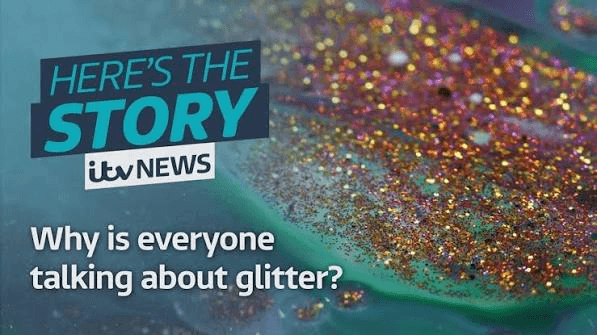
If you’ve spent any time on social media lately, you may have come across alarming posts claiming the world is running out of glitter. It sounds oddly specific, and honestly a little absurd — but the story has spread widely enough that it deserves a clear-eyed look.
The reality is more layered than the headlines suggest. There are real changes happening in the glitter industry, but they’re being driven by regulation and shifting supply chains — not some mysterious global depletion. Here’s what’s actually going on.
No Global Glitter Shortage Has Been Confirmed
Start with the most important fact: no major glitter manufacturer has reported a worldwide supply collapse. Retailers and industries that depend on glitter — crafts, cosmetics, manufacturing — are largely operating without disruption.
The shortage narrative appears to have started as online speculation, not documented supply data. According to reporting from Daily Business Voice and Omni Business Mag, the rumors spread without any supporting data from manufacturers or distributors. When ITV News contacted Glitterex — a major New Jersey-based glitter manufacturer — an operator said they had no reason to believe in a world shortage and could not comment further.
That said, there are some real, localized supply issues worth acknowledging. Certain specialty glitters — cosmetic-grade, specific color runs, or biodegradable types — can be genuinely difficult to source. But “hard to find a specific product” is very different from “the world is running out of glitter.” Conflating the two has contributed to unnecessary alarm.
How “GlitterGate” Became a Social Media Phenomenon
The shortage rumors picked up momentum in 2024 and 2025, largely through TikTok. Videos circulated about a so-called “GlitterGate” — the idea that someone, somewhere, was quietly buying up the world’s glitter supply for mysterious purposes.
But the actual seed of this story is much older. In 2018, the New York Times published a profile of Glitterex that included one striking detail: the company’s largest customer “doesn’t want anyone to know that it’s glitter” in their product. That single line went unresolved, and over the years it became the foundation for endless speculation.
Social media users have proposed theories ranging from military applications to food manufacturing to classified government projects. These are, to be clear, internet theories — not verified industry intelligence. Glitterex has not identified its largest buyer publicly, and no credible reporting has confirmed any of the more dramatic claims.
The Mysterious Largest Glitter Consumer
Even without confirmed answers, this question is genuinely interesting — and worth addressing honestly.
Glitterex staff have reportedly declined to name their top customer, which is consistent with standard confidentiality agreements in manufacturing. The most plausible theories, based on indirect evidence, point toward marine and vehicle paint as major consumers of glitter-like materials.
Here’s the key context: glitter manufacturers are often, in practice, precision-cutting companies. They produce micro-cut reflective materials that are used across a wide range of industries, well beyond arts and crafts. In marine and automotive paint, microscopic reflective particles — functionally similar to glitter — are added for aesthetic and visibility purposes. You wouldn’t look at a painted boat or car and think “that contains glitter,” but the underlying material can be the same.
One podcast cited an anonymous inside source from a marine vehicle paint company, suggesting that firm was a major buyer from Glitterex. That claim is second-hand and unverified — noted by Reddit’s r/UnresolvedMysteries community as speculative — but it aligns with what we know about how precision-cut reflective materials are used industrially.
According to GlobalSources, no concrete evidence confirms any single sector as the definitive largest consumer. The secrecy is plausible given competitive and branding sensitivities, but the mystery remains officially unsolved.
What the EU Microplastics Ban Actually Does to Glitter
This is where real, documented change is happening — and it’s being confused with a shortage by many consumers.
In 2023, the European Union adopted Commission Regulation (EU) 2023/2055, which restricts intentionally added microplastics across a wide range of products. Most traditional plastic glitter falls under this restriction.
Specifically, from October 17, 2023, loose plastic glitter intended for arts and crafts can no longer be placed on the EU market — unless it qualifies for an exemption. Exempt materials include inorganic glitter, natural materials, biodegradable glitter, and water-soluble formulations.
Cosmetic products have staggered transition timelines:
- Rinse-off cosmetics (like body wash with glitter): allowed until October 16, 2027
- Leave-on cosmetics: allowed until October 16, 2029
- Make-up, lip, and nail products: allowed until October 16, 2035, with labeling requirements from 2031 onward
Products already on the market before October 17, 2023 were not recalled and can continue to be sold. So existing stock can still move through the supply chain.
For a practical example: a crafter in the EU who used to buy bulk loose plastic glitter for kids’ art projects may now find those products replaced with glass or biodegradable alternatives. That’s not a shortage — it’s a planned phase-out with a regulatory basis.
A beauty brand selling glittery eyeshadow can continue selling existing formulations through the relevant transition period, but many brands are already reformulating with cellulose-based or mineral alternatives to get ahead of the deadline.
Traditional Glitter and the Microplastics Problem
Understanding why these regulations exist helps explain the direction the industry is heading.
Most conventional glitter is made from aluminum-metallized PET — polyethylene terephthalate, a type of plastic. When this material enters waterways, it behaves like other microplastics: it persists in the environment, is difficult to remove, and raises legitimate concerns about ecosystem and human health.
Think of it this way: traditional glitter is essentially confetti you can’t sweep up once it reaches a river or coastline. That’s the core problem regulators are responding to, and it’s why the EU restrictions specifically target plastic-based glitter while allowing alternatives.
Biodegradable and Alternative Glitters Are Growing
The good news is that the market isn’t waiting for regulations to catch up — manufacturers are already developing alternatives.
Cellulose-based glitters, including some derived from eucalyptus, are now commercially available. Researchers at the University of Cambridge developed a plant-based structural color glitter called Sparxell, which mimics the iridescent colors found in peacock feathers without relying on conventional plastics or pigments.
Market data from Intel Market Research projects the biodegradable glitter market will grow from approximately USD 59 million in 2026 to around USD 162 million by 2034 — a compound annual growth rate of roughly 13.6%. That’s a strong signal that investment is following demand.
This matters for consumers and businesses alike. Glitter isn’t disappearing — it’s changing composition. The craft glitter available in five years will likely look and perform similarly to what’s available today, just with a different base material.
What This Means for Consumers and Businesses
If you’re a crafter, event planner, or beauty brand trying to navigate this landscape, here’s a practical summary of where things stand.
For consumers in the EU: loose plastic craft glitter has already been removed from shelves. Look for products labeled as biodegradable, cellulose-based, or mineral-based. These are legitimate alternatives, not inferior substitutes — many perform comparably for most applications.
For cosmetics users: your current favorite glitter products are not being immediately pulled. Transition periods extend in some cases through 2035. However, formulations will gradually change as brands adapt.
For businesses outside the EU: regulations vary significantly by region. The EU rules apply specifically to the EU market. Other countries have not implemented equivalent restrictions at this time, though that could change as environmental policy continues to evolve globally.
If you’re running a small business that sources specialty glitter and you’ve noticed availability issues, that’s real — but it’s likely a product-specific or supply chain issue, not evidence of a universal shortage. Checking multiple suppliers, sourcing online, or shifting to bulk biodegradable alternatives are practical steps worth taking. AllBizDaily regularly covers business and supply chain developments that affect small and mid-sized operations navigating changes like these.
The Bottom Line
There is no confirmed global glitter shortage. The rumors are largely the product of social media amplification built on an unresolved detail from a 2018 news article about a secretive industrial buyer.
What is real: EU regulations are removing most plastic glitter from that market on a defined timeline, some specialty glitters face localized supply constraints, and the industry is transitioning toward biodegradable and alternative materials.
The glitter market is changing — in response to legitimate environmental concerns and regulatory pressure — but it is not collapsing. For most consumers and businesses, the practical impact is a shift in product composition, not a disappearance of glitter altogether. That’s a meaningful distinction worth keeping in mind before the next viral headline suggests otherwise.
Read Also:
